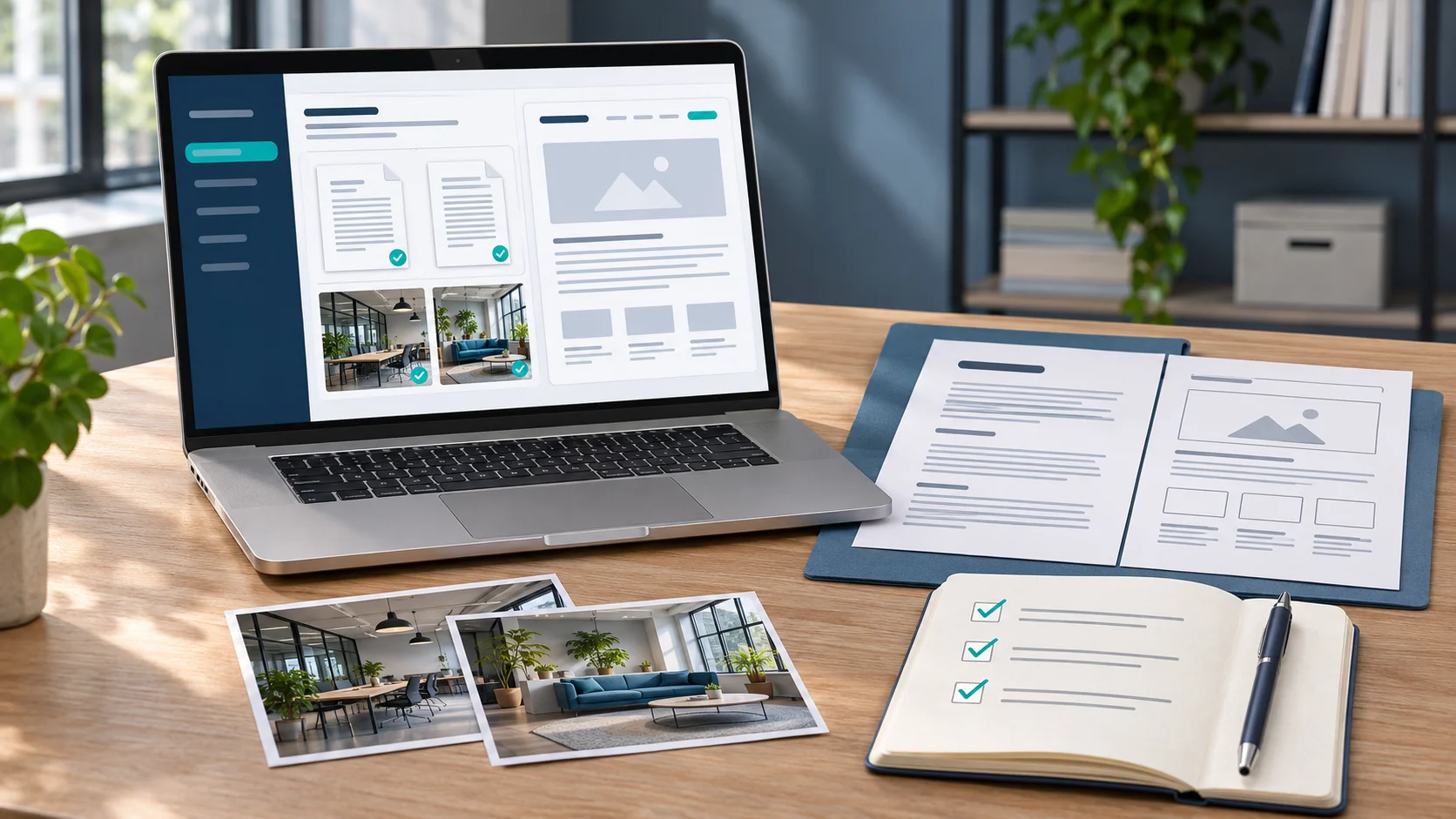
Well-prepared content helps a new website explain your business clearly. Organising text, photographs and key information before detailed design begins gives the project a stronger starting point.
Early discussions often focus on colours, layouts and animation, with content left until later. If text and photographs arrive just before launch, the planned layout may prove impractical and important information may still be missing.
You do not need perfectly written copy before the first meeting. Start by gathering accurate information and deciding what visitors should learn on each page.
Start with your visitors and their questions
Write down who you want to reach, what you offer and what visitors should do next: call, send an enquiry, browse products or arrange a meeting. Then collect the questions clients ask most often.
If a question repeatedly comes up in conversations, its answer probably belongs on the website. This gives the content a practical purpose grounded in real visitor needs.
Create a page outline
A business website might initially include a homepage, company profile, services, projects and contact page. Give each page one main purpose and list the information it needs.
For an individual service, explain the problem it solves, who it is for, what is included and how working together begins. Avoid repeating the same general description on every page.
Gather photographs and concrete examples
Prepare a high-quality logo, photographs of your team or premises and materials showing your products or work. For each file, note what it shows and where it should be used.
For project references, record the project name, your role and the work completed. Only include results you can substantiate and materials you have permission to use. Verify figures and client testimonials before publication.
Organise content for multiple languages
For a multilingual website, agree on the source text before preparing translations. Adapt wording and tone to each audience while keeping service and product names consistent.
Track translated titles, short descriptions, button labels and form messages in the same overview. This helps prevent parts of a page from remaining in another language.
Assign responsibility for final approval
Agree on who provides materials, who verifies information and who approves content for publication. Keep approved copy and images in one agreed location with clear filenames.
During the final review, check telephone numbers, addresses, service names and contact forms. Read the content in the actual page layout too, particularly on a phone.
At QDevs, we treat content as part of website planning alongside design and functionality.
Preparing a new website? Get in touch to define the structure and materials your project needs.